

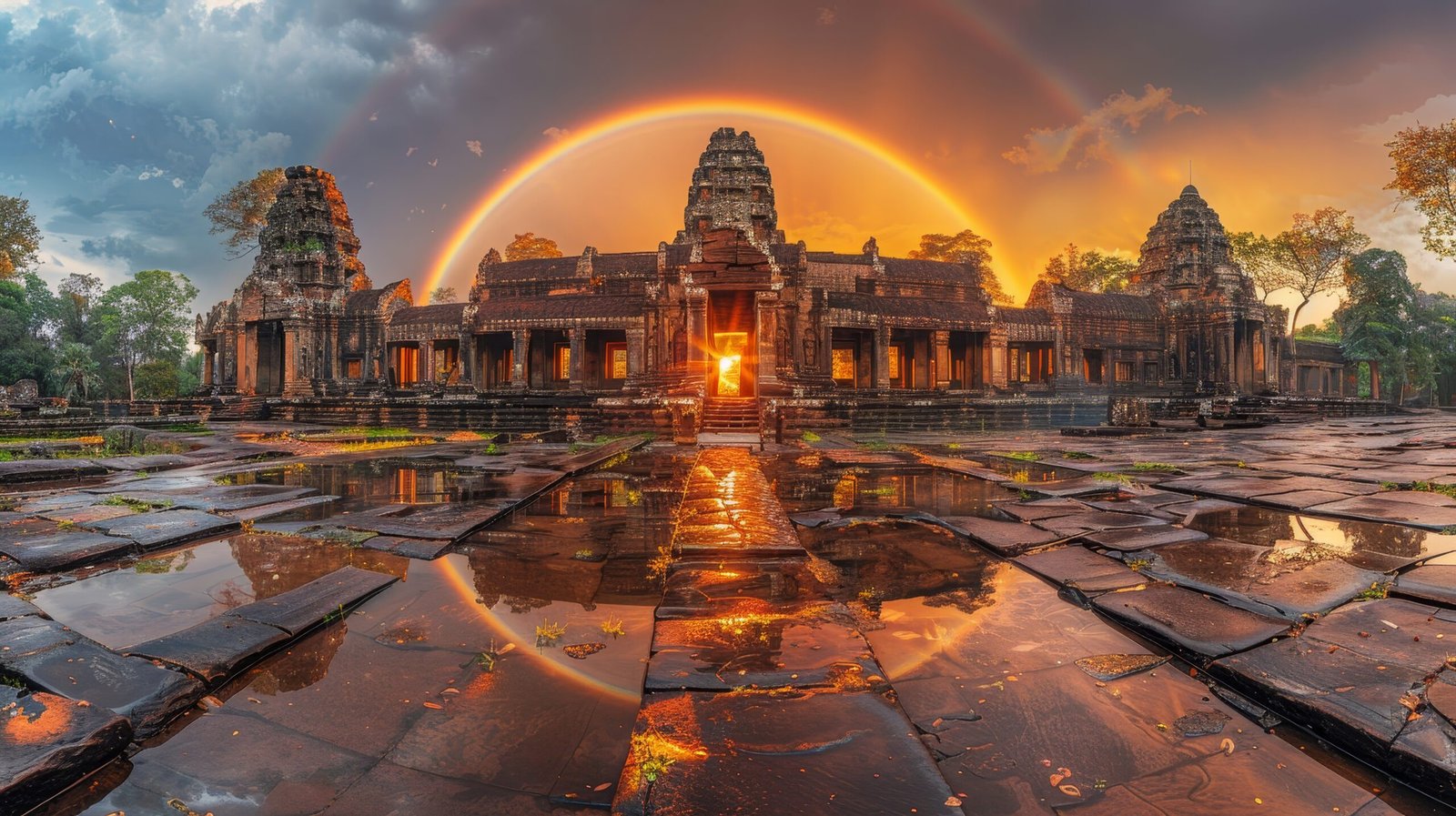
Hinduism is one of the world’s oldest and most enduring religions, with a history spanning more than 4,000 years. Known by many followers as Sanatana Dharma (The Eternal Way), Hinduism is not a single organized religion but a diverse collection of beliefs, philosophies, traditions, and spiritual practices that have evolved over millennia.
Today, Hinduism is practiced by over one billion people worldwide and continues to shape the cultural, philosophical, and spiritual landscape of India and beyond. Understanding the history of Hinduism provides valuable insights into one of humanity’s oldest living religious traditions.
Origins of Hinduism
Unlike many major religions, Hinduism does not have a single founder or a specific date of origin. Its roots lie deep within the ancient civilizations of the Indian subcontinent.
Historians believe that Hindu traditions evolved through the interaction of indigenous cultures and Indo-Aryan peoples who migrated into northern India around 1500 BCE. Over centuries, various religious beliefs, rituals, and philosophical ideas merged to form what would later become Hinduism.
The earliest foundations of Hindu thought are found in the Vedas, the oldest sacred texts of Hinduism.
The Vedic Period (1500–500 BCE)
The Birth of Vedic Tradition
The Vedic Period marks the earliest identifiable phase in Hindu history. During this era, the Vedas were composed and transmitted orally from generation to generation.
The four Vedas are:
- Rigveda
The oldest of the Vedas, containing hymns dedicated to various deities.
- Samaveda
A collection of melodies and chants used during religious ceremonies.
- Yajurveda
Contains sacrificial formulas and ritual instructions.
- Atharvaveda
Includes prayers, spells, healing practices, and philosophical reflections.
Religious Practices During the Vedic Age
The Vedic people worshipped natural forces and deities such as:
- Indra (God of Thunder)
- Agni (God of Fire)
- Varuna (God of Cosmic Order)
- Surya (Sun God)
Religious rituals centered around fire sacrifices known as Yajnas, performed by priests called Brahmins.
Emergence of Key Concepts
During the later Vedic period, several important Hindu concepts emerged:
- Dharma (righteous duty)
- Karma (law of cause and effect)
- Samsara (cycle of birth and rebirth)
- Moksha (liberation from rebirth)
These ideas would become central to Hindu philosophy.
The Epic Age (500–300 BCE)
Rise of Great Hindu Epics
The Epic Age witnessed the composition of two monumental literary works:
The Ramayana
The Ramayana tells the story of Lord Rama, his wife Sita, and his battle against the demon king Ravana. It teaches ideals of duty, loyalty, righteousness, and devotion.
The Mahabharata
The Mahabharata is the longest epic poem in the world. It narrates the conflict between the Pandavas and Kauravas while exploring profound philosophical questions.
The Bhagavad Gita
One of the most revered Hindu scriptures, the Bhagavad Gita forms part of the Mahabharata.
In this sacred dialogue, Lord Krishna teaches Prince Arjuna about:
- Duty and righteousness
- Spiritual wisdom
- Selfless action
- Devotion to God
- The path to liberation
The Bhagavad Gita remains one of the most influential spiritual texts globally.
The Classical Period (300 BCE–1200 CE)
The Golden Age of Hindu Thought
This period saw extraordinary growth in Hindu philosophy, literature, science, and art.
Development of Hindu Philosophical Schools
Several major schools of Hindu philosophy emerged:
Vedanta
Focuses on understanding the ultimate reality (Brahman).
Sankhya
Explores the relationship between consciousness and matter.
Yoga
Provides practical methods for spiritual discipline and self-realization.
Nyaya
Emphasizes logic and reasoning.
Vaisheshika
Studies the nature of existence and matter.
Mimamsa
Focuses on interpreting Vedic rituals and scriptures.
These philosophical traditions helped establish Hinduism as one of the world’s most sophisticated intellectual systems.
The Gupta Empire: The Golden Age of Hindu Civilization (320–550 CE)
The Gupta Empire is often regarded as the golden age of Indian history.
Achievements During the Gupta Period
Significant developments included:
- Advancement in mathematics
- Growth of astronomy
- Flourishing literature
- Temple architecture
- Sculpture and visual arts
Famous scholars such as Aryabhata made remarkable contributions to science and mathematics.
Growth of Temple Worship
During this era, temple construction became widespread. Worship of major deities such as:
- Vishnu
- Shiva
- Devi (the Divine Mother)
became increasingly popular.
Many iconic Hindu temples trace their origins to this period.
The Medieval Period (1200–1800 CE)
Challenges and Adaptation
The medieval period witnessed foreign invasions, political instability, and changing social structures. Despite these challenges, Hinduism demonstrated remarkable resilience.
The Bhakti Movement
One of the most significant developments was the rise of the Bhakti Movement.
Bhakti emphasized:
- Personal devotion to God
- Equality among devotees
- Spiritual connection over ritual complexity
- Love and surrender to the Divine
Prominent Bhakti saints included:
- Mirabai
- Tulsidas
- Kabir
- Surdas
- Chaitanya Mahaprabhu
Their teachings made spirituality accessible to ordinary people regardless of caste or social status.
Regional Traditions Flourish
Different regions developed unique devotional traditions dedicated to:
- Vishnu
- Shiva
- Krishna
- Rama
- Devi
These traditions enriched Hindu diversity and cultural expression.
The Modern Period (1800–Present)
Colonial Influence and Reform Movements
British colonial rule brought significant social and political changes to India.
Several Hindu reformers sought to reinterpret ancient teachings for modern society.
Important reform movements included:
Brahmo Samaj
Founded by Raja Ram Mohan Roy to promote social reform and monotheistic ideas.
Arya Samaj
Founded by Swami Dayananda Saraswati to revive Vedic teachings.
Ramakrishna Mission
Established by Swami Vivekananda to promote spiritual growth and social service.
Hinduism and India’s Independence Movement
Many Hindu leaders played important roles in India’s freedom struggle.
Spiritual values inspired movements focused on:
- Non-violence
- Truth
- Social justice
- National unity
Hindu philosophy significantly influenced India’s modern identity.
Hinduism in the 21st Century
Today, Hinduism is practiced not only in India but across the world.
Global Presence
Large Hindu communities exist in:
- United States
- United Kingdom
- Canada
- Australia
- South Africa
- Singapore
- Malaysia
Yoga, meditation, Ayurveda, and Vedantic philosophy have gained worldwide popularity.
Contemporary Challenges
Modern Hinduism faces several challenges:
- Religious polarization
- Globalization
- Cultural preservation
- Environmental concerns
- Interfaith dialogue
At the same time, it continues to evolve and adapt to changing social realities.
Core Beliefs That Have Endured Through Time
Despite its diversity, Hinduism continues to be united by several foundational concepts:
Dharma
Living according to moral and ethical principles.
Karma
Actions influence future experiences.
Samsara
The cycle of birth, death, and rebirth.
Moksha
Liberation from the cycle of rebirth.
Brahman
The ultimate, infinite reality underlying all existence.
These teachings have remained central to Hindu thought for thousands of years.
Conclusion
The history of Hinduism is a remarkable story of continuity, adaptation, and spiritual exploration. From the ancient Vedic hymns to modern global spirituality, Hinduism has evolved while preserving its core philosophical foundations.
As one of the world’s oldest living religions, Hinduism continues to inspire millions through its teachings on duty, compassion, self-realization, and the search for ultimate truth. Its rich heritage remains a powerful force in shaping culture, philosophy, and spirituality across the globe.
Whether studied as a religion, philosophy, or way of life, Hinduism’s enduring legacy stands as a testament to humanity’s timeless quest for meaning and understanding.