

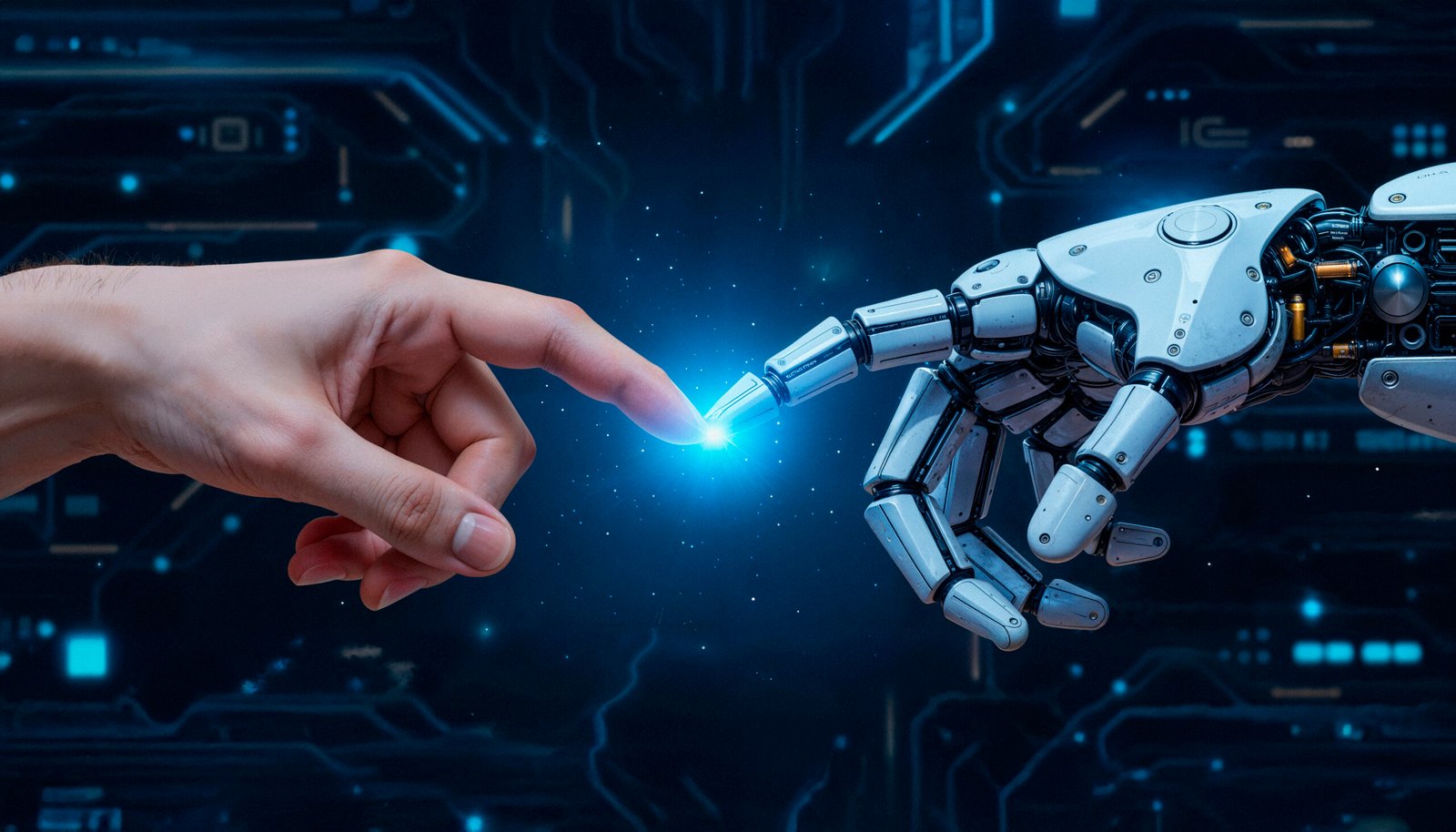
Artificial Intelligence is no longer a futuristic concept, it’s a present-day reality shaping how we work, design, communicate, and build. From generating websites in minutes to creating high-quality visuals and writing content at scale, AI has become an essential tool across industries.
For many businesses and creators, it raises an exciting question:
If AI can do so much, do we still need humans in the process?
The honest answer is simple, yes, more than ever.
While AI is powerful, efficient, and constantly evolving, it cannot fully replace human thinking, creativity, and emotional understanding. Instead, the real opportunity lies in understanding where AI excels, and where human interaction becomes irreplaceable.
The Rise of AI in Creation and Design
AI tools have dramatically lowered the barrier to entry for creating digital products. Today, a single person can:
- Build a website without coding
- Design graphics without formal training
- Write blogs, ads, and scripts instantly
- Generate UI/UX layouts within seconds
This shift is empowering, especially for startups, freelancers, and small businesses. Tasks that once required entire teams can now be executed faster and at lower cost.
But speed and scale don’t always equal quality or impact.
The Core Limitation of AI: It Doesn’t Truly Understand
At its core, AI works on patterns. It analyzes massive amounts of data and predicts the most likely output based on input.
That means:
- It doesn’t have personal experiences
- It doesn’t feel emotions
- It doesn’t understand intent beyond data
So while AI can replicate human-like output, it cannot replace human perspective.
This distinction is critical.
Because the most valuable work in design, branding, and communication isn’t just about output, it’s about meaning, intention, and connection.
Where AI Falls Short (And Humans Step In)
1. Deep Creativity vs Pattern-Based Output
AI is excellent at remixing existing ideas. It can generate variations, suggest layouts, and produce designs based on trends.
But true innovation, the kind that disrupts industries or creates entirely new experiences comes from human imagination.
Humans ask:
- What hasn’t been done yet?
- What problem are we really solving?
- How can we do this differently?
AI, on the other hand, asks:
- What is most likely based on existing data?
- That’s a fundamental difference.
2. Emotional Connection and User Experience
In UI/UX design and content creation, success is not just about functionality, it’s about how users feel.
A great design:
- Builds trust
- Creates comfort
- Guides behavior intuitively
- Connects emotionally with the audience
AI can generate clean layouts and structured flows, but it cannot truly understand human emotions, frustrations, or desires.
Only humans can interpret subtle cues like:
- Cultural context
- Tone sensitivity
- Psychological triggers
This is why human designers are still essential in crafting meaningful user experiences.
3. Context, Culture, and Real-World Nuance
AI depends on existing data. But the real world is constantly changing.
New trends, local behaviors, and cultural nuances often exist outside structured datasets.
For example:
- A design that works in one region may fail in another
- A marketing message may be interpreted differently across cultures
- A brand tone may need subtle adjustments depending on audience
Humans naturally adapt to these changes. AI struggles without explicit guidance.
4. Ethical Thinking and Decision-Making
AI doesn’t have ethics it follows instructions.
But in real-world applications, decisions often involve:
- Privacy concerns
- Inclusivity and representation
- Brand responsibility
- Social impact
These are not technical decisions. They are human ones.
Without human oversight, AI-generated outputs can sometimes be misleading, biased, or inappropriate.
The Real Role of AI: A Powerful Assistant, Not a Replacement
Instead of viewing AI as a replacement, it’s more accurate to see it as an amplifier of human capability.
AI can:
- Speed up repetitive tasks
- Generate multiple options quickly
- Assist in brainstorming
- Handle data-heavy processes
But humans are still needed to:
- Define the vision
- Make strategic decisions
- Add originality and meaning
- Refine and personalize outputs
- Ensure quality and authenticity
Think of AI as a highly skilled intern fast, efficient, and helpful but still needing direction.
The Future: Human + AI Collaboration
The most successful creators and businesses won’t be the ones who rely only on AI, but those who know how to collaborate with it effectively.
Here’s what that collaboration looks like:
AI Handles:
- Speed
- Automation
- Repetitive production
- Data processing
Humans Handle:
- Creativity
- Strategy
- Emotion
- Storytelling
- Decision-making
This balance creates work that is not only efficient but also meaningful and impactful.
Practical Tips: Using AI Without Losing the Human Touch
If you’re a designer, marketer, or business owner, here’s how to use AI effectively:
- Start with Human Intent
Before using AI, clearly define your goal, audience, and message. - Use AI for Drafts, Not Final Output
Let AI generate ideas, but refine them with your own perspective. - Add Personalization
Customize AI outputs to reflect your brand voice and identity. - Validate with Real Users
Test designs and content with actual people not just algorithms. - Stay Ethically Aware
Review AI outputs for bias, accuracy, and appropriateness.
Final Thoughts
AI is one of the most powerful tools we’ve ever created. It has transformed how we build, design, and communicate.
But no matter how advanced it becomes, it cannot replace what makes human work truly valuable:
- Emotion
- Creativity
- Intent
- Meaning
You can build almost anything with AI.
But building something that truly connects with people?
That still requires a human.
 Raj Kumar